The Complete Guide to Buying Watches: How to Choose the Right Hand Watches for Every Occasion
Introduction
“Walk into any store selling watches and you’ll understand the problem fast: rows of dials, a dozen strap materials, and sales staff throwing around terms like ‘automatic movement‘ and ‘water resistance rating’ as if everyone just knows what they mean. If you’ve ever left a store more confused than when you walked in, you’re not alone.”
Buying watches shouldn’t feel like passing a horology exam. Whether you’re shopping for your first serious timepiece, replacing a broken watch you’ve worn for a decade, or picking out hand watches as a gift, the goal is the same — find something that fits your wrist, your budget, and your daily life.
In this guide, we’ll walk through the different types of watches available today, what actually matters when comparing movements and materials, how to set a realistic budget, and how to avoid the mistakes that trip up first-time buyers. By the end, you’ll be able to walk into a store — or scroll through an online listing — and know exactly what you’re looking at.
Why Hand Watches Still Matter in a Smartphone World
It’s a fair question. Your phone tells time accurately, and a smartwatch does everything from tracking your heart rate to reading text messages. So why do hand watches remain one of the most gifted and collected accessories on the planet?
A few reasons come up again and again when people talk about why they still wear one:
- They’re a personal statement. A watch says something about you before you ever say a word — understated and classic, bold and sporty, or minimalist and modern.
- They don’t need charging every night. Mechanical and quartz watches run for months or years without a battery swap, unlike most smartwatches that need daily attention.
- They hold sentimental and resale value. A well-made watch can be passed down, and certain brands and models actually appreciate over time.
- They’re built for one job. No notifications, no screen glare, no battery anxiety — just a reliable read on the time.
None of this means smartwatches are a bad choice; it just means traditional watches solve a different problem, and for a lot of people, that problem is “I want something that lasts.”
Understanding the Main Types of Watches
Before comparing specific models, it helps to know the broad categories you’ll run into. Almost every watch on the market fits into one of these buckets.
Analog Watches
The classic style — hour and minute hands sweeping across a dial. Analog hand watches are the most common style for dress and everyday wear because the design language is timeless and pairs with almost any outfit.
Digital Watches
Digital displays show the time as numbers rather than hands. They’re popular for sports and outdoor use because they’re typically more shock-resistant and often include stopwatches, alarms, and backlighting.
Chronograph Watches
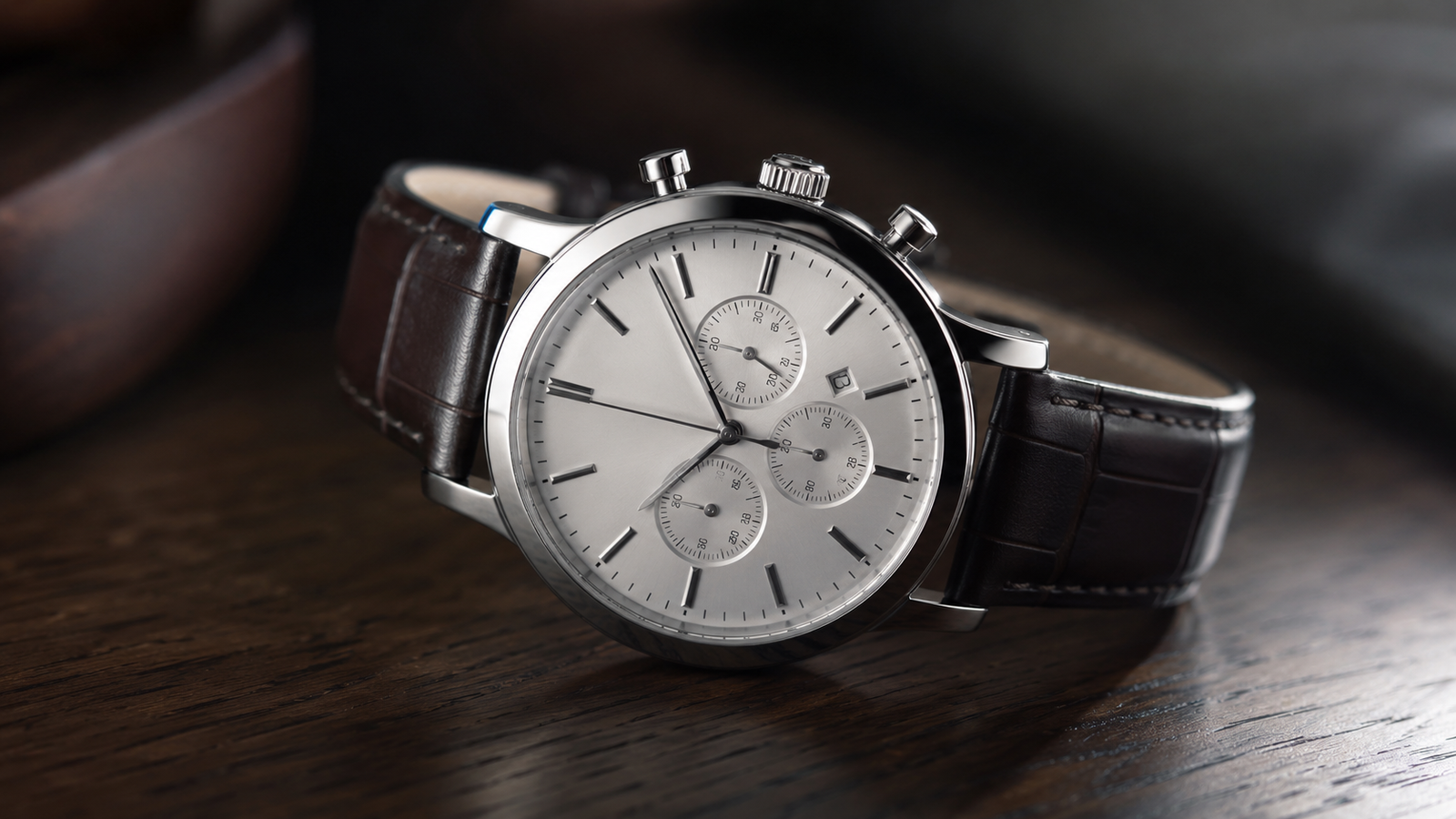
A chronograph is essentially an analog watch with a built-in stopwatch function, identifiable by the extra sub-dials on the face. These are favorites among people who want a sportier look with genuine function, not just style.
Smartwatches
Connected to your phone, these track fitness, display notifications, and often run apps. They’re the right pick if convenience and health tracking matter more to you than mechanical craftsmanship.
Movement Types: The Heart of Every Watch
If there’s one thing worth understanding before you buy, it’s movement type — the mechanism that actually keeps time. This single spec affects price, maintenance, and how the watch feels to own.
Quartz Movement
Powered by a battery and a vibrating quartz crystal, these watches are highly accurate, low-maintenance, and generally the most affordable option. If you want a reliable watch without thinking about it much, quartz is usually the easiest starting point.
Automatic (Self-Winding) Movement
These mechanical watches wind themselves using the natural motion of your wrist. No battery, no charging — just the satisfaction of wearing a tiny piece of engineering. They tend to cost more and can lose or gain a few seconds a day, but many buyers find that trade-off part of the appeal.
Manual Wind Movement
Similar to automatic movements but wound by hand, usually via the crown. These are popular with collectors who enjoy the ritual of winding their watch each morning.
Quick answer: If you want low maintenance and accuracy, choose quartz. If you value craftsmanship and don’t mind occasional winding or servicing, choose automatic.
How to Choose Watches That Fit Your Lifestyle
The best watch isn’t necessarily the most expensive one — it’s the one that fits how you actually live. Here’s how to narrow things down.
Consider Your Daily Routine
If you’re active, swim, or work with your hands, prioritize water resistance (look for at least 100 meters/10 ATM) and a durable case material like stainless steel or titanium. If you’re mostly in an office setting, a leather-strap dress watch will likely serve you better than a rugged sports model.
Match the Watch to the Occasion
Many people build a small rotation rather than relying on one watch for everything:
- A dress watch — slim profile, leather strap, minimal dial — for formal events and work
- A everyday watch — durable, versatile, mid-size — for daily wear
- A sport watch — chronograph or digital, high water resistance — for the gym or outdoors
Think About Strap Material
Leather straps look polished but wear out faster and aren’t ideal for water exposure. Metal bracelets last longer and suit both casual and formal settings. Rubber or silicone straps are the go-to for sports and swimming.
Setting a Realistic Budget for Hand Watches
Watches span an enormous price range, and it’s easy to either overspend or assume quality requires a huge budget. Here’s a general breakdown:
- Under $100: Reliable quartz watches from established brands. Great for everyday wear and gifts.
- $100–$500: Wider selection of automatic movements, better materials, and recognizable mid-tier brands.
- $500–$2,000: Entry-level luxury and well-regarded Swiss and Japanese manufacturers, often with in-house movements.
- $2,000+: Established luxury brands, limited editions, and pieces with genuine investment or collector value.
A good rule of thumb: buy the best watch you can afford within a category you’ll actually wear often, rather than stretching for a luxury piece that sits in a drawer.
Common Mistakes to Avoid When Buying Watches
Even experienced shoppers fall into a few predictable traps:
- Ignoring wrist size. A 44mm case might look great in a photo but overwhelm a smaller wrist. Measure your wrist before buying.
- Overlooking water resistance ratings. “Water resistant” doesn’t mean swim-proof — check the actual meter/ATM rating before getting it wet.
- Skipping authorized dealers for luxury pieces. Counterfeit and grey-market watches are common online; buy from authorized retailers or verified resellers.
- Forgetting about servicing costs. Mechanical watches typically need servicing every 3–5 years — factor that into the long-term cost.
- Choosing style over function. A beautiful watch you can’t actually wear to work or the gym ends up unused.
Caring for Your Watch So It Lasts
A well-maintained watch can easily outlive its original owner. A few habits make a real difference:
- Wipe down the case and strap after wear, especially in humid climates
- Avoid extreme temperature changes, which can affect gaskets and lubricants
- Store watches in a dry place, ideally in a case or box away from direct sunlight
- Have automatic and mechanical watches serviced by a qualified watchmaker every few years
- Avoid pressing buttons or adjusting the crown underwater unless it’s explicitly rated for that
Frequently Asked Questions
What’s the difference between a watch and a smartwatch? A traditional watch tells time using analog hands or a digital display and often lasts for years without charging. A smartwatch connects to your phone, tracks fitness data, and needs regular charging, usually every one to two days.
How much should I spend on my first watch? For a first serious watch, $100–$500 typically offers the best balance of quality, durability, and design without a steep financial commitment.
Are automatic watches better than quartz? Neither is objectively “better” — automatic watches offer mechanical craftsmanship and no battery dependence, while quartz watches are more accurate and require less maintenance. The right choice depends on what you value more.
How do I know my correct watch size? Measure your wrist circumference in millimeters. A case diameter of 38–42mm generally suits most wrists, with smaller cases for thinner wrists and larger cases for broader ones.
How often should a watch be serviced? Mechanical and automatic watches generally need servicing every 3–5 years. Quartz watches mainly need a battery replacement every 1–2 years and far less frequent servicing overall.
Final Thoughts
Choosing the right watch comes down to understanding a few core basics — movement type, case size, strap material, and how the watch fits your everyday life — rather than chasing trends or the biggest name on the dial. Once you know what to look for, shopping for hand watches becomes a lot less intimidating and a lot more enjoyable.
Ready to find the right fit? Browse our full collection of watches to compare styles, movements, and price ranges, or reach out to our team for personalized recommendations based on your lifestyle and budget.
Internal linking opportunities:
- Link “types of watches” section to a dedicated category page (e.g., /analog-watches, /chronograph-watches)
- Link “movement types” section to a glossary or “how automatic watches work” post
- Link “budget” section to specific price-tier collection pages
- Link CTA at the end to the main watch shop/collection page
Word count: ~1,800 words Primary keyword density check: “watches” appears throughout at a natural ~1.5% density; “hand watches” used as secondary keyword in key headings and intro/conclusion for Yoast targeting.









Post Comment