Outfit Ideas for Every Occasion: A Practical Guide to Dressing Well in 2026
If you’re searching for outfit ideas because your closet feels full but your options feel empty, you’re not alone. Standing there still feeling like you have “nothing to wear” is one of the most common — and most avoidable — style frustrations out there. It’s rarely about not owning enough clothes. It’s about not having a clear system for putting the right pieces together for the right moment.
This guide breaks down outfit ideas for the situations that actually come up in real life: work, weekends, dates, travel, and changing seasons. You’ll also get simple styling principles you can reuse over and over, so you’re not starting from scratch every time you get dressed. By the end, you’ll have a practical framework for building an outfit — not just a list of trends that go out of style in a month.
Why a Good Outfit Formula Matters More Than Trends
Chasing every new trend is expensive and exhausting, and most trends don’t actually suit everyone. A better approach is learning a few reliable outfit formulas — combinations of fit, color, and layering that work again and again regardless of what’s “in” this season.
A solid formula typically includes:
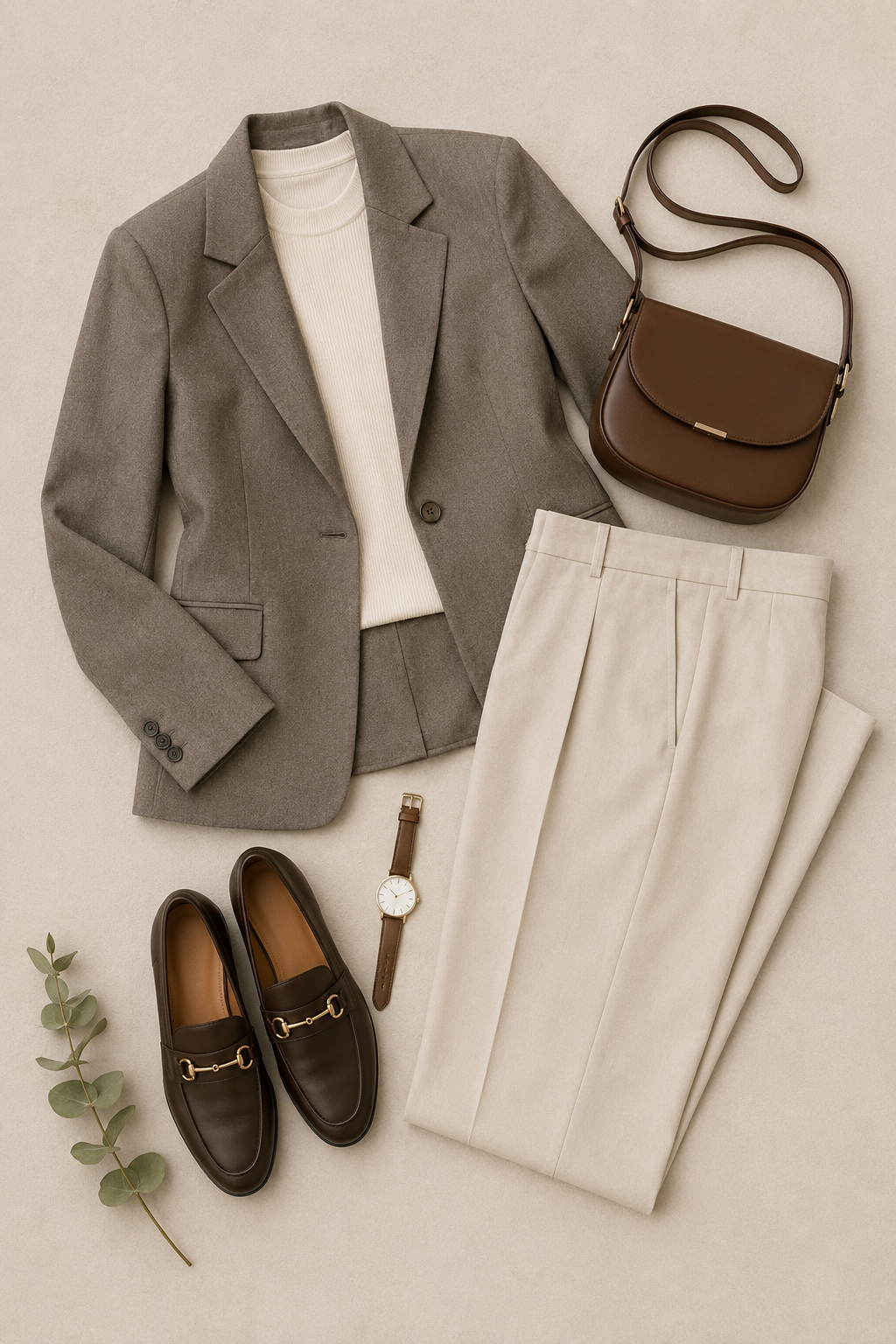
- One anchor piece — the item the outfit is built around, like a blazer, a great pair of jeans, or a dress
- A complementary layer — a jacket, cardigan, or vest that adds structure
- Neutral or coordinated color palette — so pieces can be mixed and matched easily; if you want a refresher on how colors work together, this color wheel guide is a helpful reference
- One intentional detail — a bag, shoe, or accessory that pulls the look together
Once you understand this structure, building outfit ideas becomes far less stressful, whether you’re dressing for a meeting or a weekend brunch.
Everyday Outfit Ideas for Work and Casual Settings
Business Casual Outfit Ideas
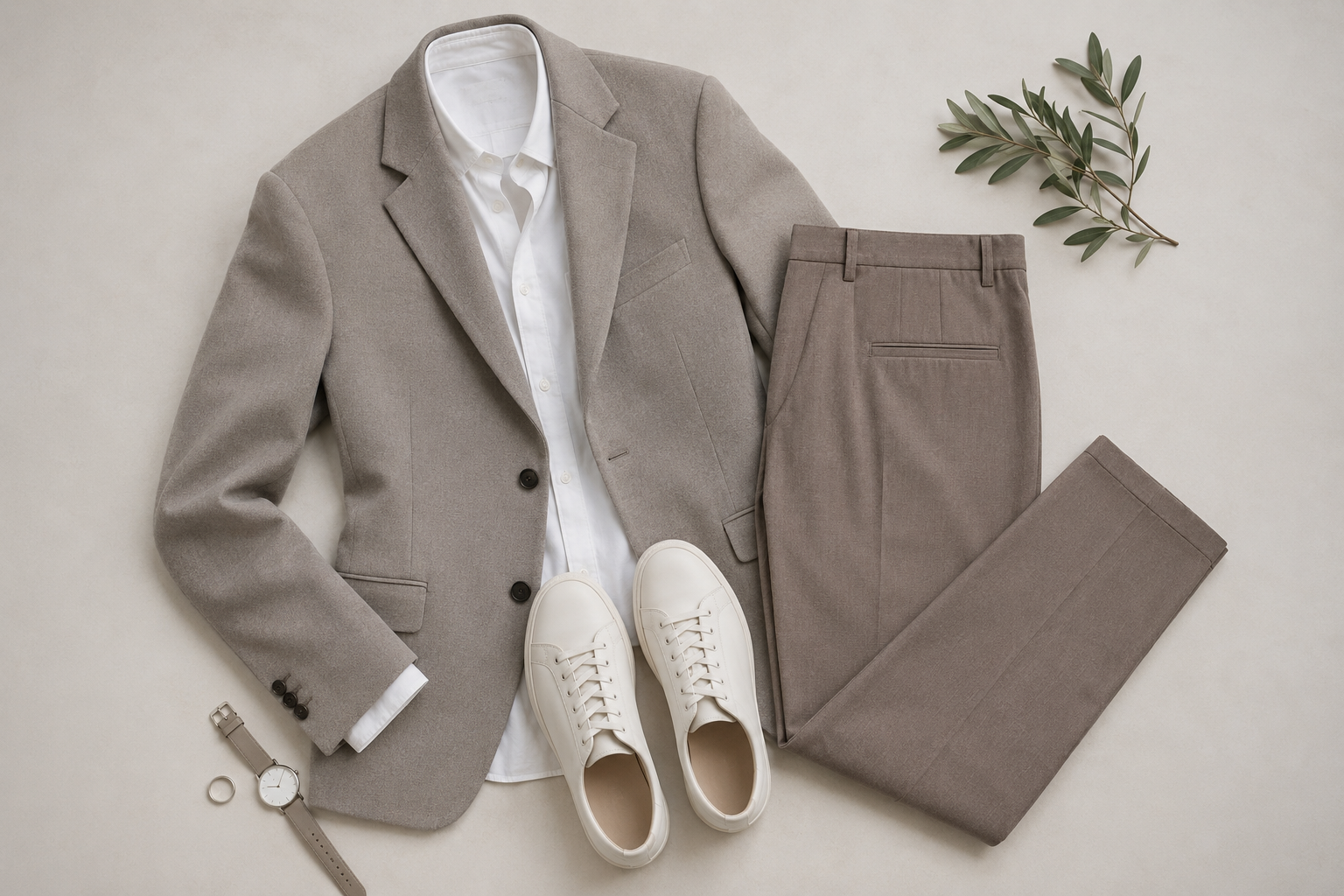
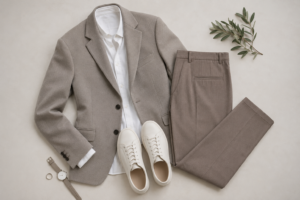
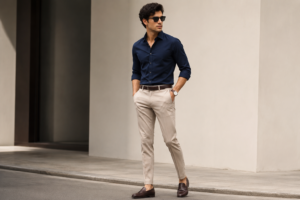
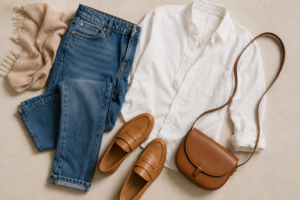
A tailored blazer over a simple top, paired with straight-leg trousers or a midi skirt, works in almost any office environment. Swap sneakers for loafers or low heels to keep it polished without being overly formal.
Smart Casual for Hybrid Workdays
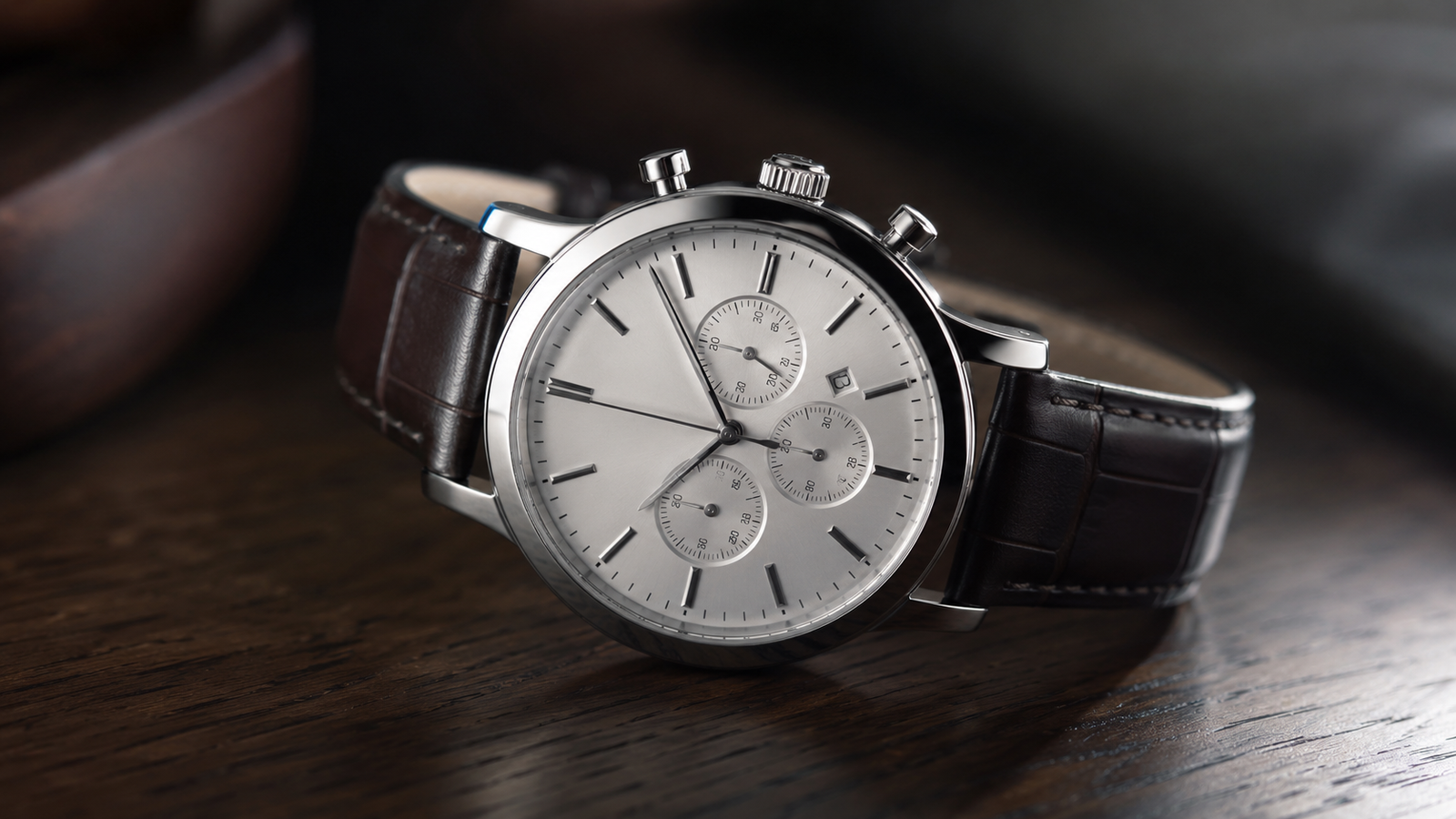
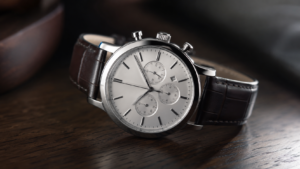
For days split between home and office, a structured knit sweater with tailored joggers or dark denim strikes a balance between comfortable and put-together. Add a simple watch or minimal jewelry to elevate it slightly.
Weekend and Errand-Day Outfits
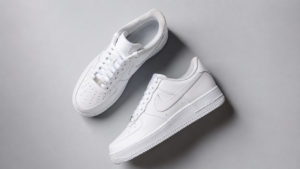
Comfort doesn’t have to mean sloppy. A well-fitted t-shirt, relaxed denim, and clean sneakers is a formula that always reads intentional, especially with one styling detail like a crossbody bag or a baseball cap.
Outfit Ideas for Dates and Nights Out
Casual Date Night
A fitted top paired with dark jeans and ankle boots works for coffee dates, casual dinners, or low-key hangouts. Adding a leather jacket instantly makes the outfit feel more finished.
Dinner or Special Occasion Date
A slip dress or tailored jumpsuit paired with heeled sandals and a clutch works well for reservations at a nicer restaurant. Keep accessories minimal so the outfit doesn’t feel overdone.
Going-Out Looks
For nights out with friends, bold color or texture — think a satin top, statement earrings, or a patterned skirt — adds personality without requiring a full “trendy” wardrobe overhaul.
Seasonal Outfit Ideas: Dressing for the Weather
Spring and Summer Outfit Ideas
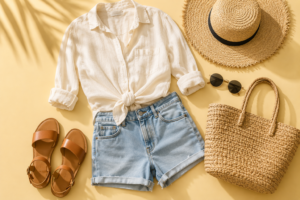
Lightweight fabrics like linen and cotton keep you comfortable in warmer months. A linen shirt with tailored shorts or a breathable sundress with sandals are reliable go-tos for both casual and semi-formal summer settings.
Fall and Winter Outfit Ideas
Layering is the key skill for colder months. A turtleneck under a structured coat, paired with wool trousers or dark denim, keeps you warm without sacrificing style. Boots and a scarf are easy ways to add both function and polish.
Transitional Weather Outfits
For unpredictable in-between seasons, a light jacket or cardigan you can easily remove is more practical than committing to one temperature extreme. Layer pieces you can add or subtract as the day changes.
Travel Outfit Ideas That Actually Work
Packing for a trip is one of the biggest style stress points. A few principles make it easier:
- Stick to one color family so every piece can mix and match
- Pack versatile layers instead of single-use outfits
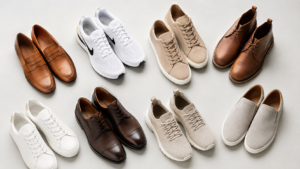
- Choose comfortable shoes that still look put-together — sneakers or loafers over anything painful to walk in
- Bring one dressier option in case plans change unexpectedly
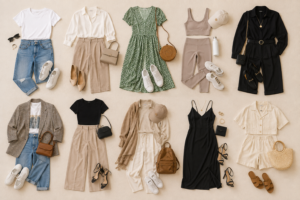
A capsule of five to seven pieces can realistically create ten or more outfit combinations, which saves both suitcase space and decision fatigue. (Internal link opportunity: link this sentence to your capsule wardrobe or packing list article, e.g. “/capsule-wardrobe-guide”)
[Insert image here — e.g., a flat-lay of a travel capsule wardrobe. Alt text: “travel outfit ideas capsule wardrobe”]
Building Outfit Ideas Around Your Body Type and Personal Style
Outfit ideas work best when they’re adapted to your actual proportions and comfort level, not copied exactly from someone else’s closet. (Internal link opportunity: link “body type” to a body-type styling guide if you have one, e.g. “/dress-for-your-body-type”) A few adjustments that help:
- If you prefer more structure, look for pieces with defined waistlines or tailored cuts
- If you prefer relaxed silhouettes, balance looser pieces with one fitted element so the outfit doesn’t look shapeless
- Pay attention to what colors and fits make you feel confident, and lean into those repeatedly — consistency is what actually creates a personal style, not variety for its own sake
Frequently Asked Questions
How do I come up with outfit ideas quickly? Start with one anchor piece you already love, then build around it using a complementary layer, a coordinating color palette, and one accessory to finish the look.
What is the easiest outfit formula for beginners? A fitted top, straight or tailored bottoms, and one layering piece — like a jacket or cardigan — is one of the simplest formulas that works across most occasions.
How many outfits can I create from a small wardrobe? With five to seven versatile, coordinating pieces, most people can realistically create ten or more distinct outfit combinations.
What should I wear if I don’t know the dress code? Smart casual is a safe middle ground — think tailored trousers or a midi skirt with a simple top, which can be dressed up or down depending on the setting.
How do I make a casual outfit look more put-together? Add one intentional detail, such as structured outerwear, a well-chosen bag, or minimal jewelry, to instantly elevate a simple outfit.
Final Thoughts and Next Steps
Great outfits aren’t about owning endless clothes or keeping up with every trend — they’re about understanding a few reliable formulas and applying them to your own style and comfort level. Once you know how to anchor an outfit, layer intentionally, and add one finishing detail, getting dressed stops being a daily struggle.
Start by picking one formula from this guide and building three outfits around it this week. Small, repeatable systems like this are what actually create a wardrobe that works for you every day — not just on the days you feel inspired.

Post Comment